
Best Ankle Friendly Cardio At Home
📖 Table of Contents
- Why Ankle-Friendly Cardio Matters
- The Best Ankle-Friendly Cardio Exercises to Try
- How to Build a Sustainable Routine
- The Benefits of Low-Impact Exercise
- How to Modify Exercises for Different Fitness Levels
- How to Stay Motivated and Consistent
- What to Expect in the First Few Weeks
- Make It Your Way
- Frequently Asked Questions
I used to think that any good cardio workout had to involve running, jumping, or high-impact movements. But after a sprained ankle forced me to rethink my routine, I discovered that there are countless low-impact, ankle-friendly ways to stay active and healthy from the comfort of my own home. The key was focusing on movements that protected my joints while still getting my heart rate up. That’s how I found this collection of the best ankle-friendly cardio exercises that are easy to do, require no special equipment, and still deliver a powerful workout.[3]
This journey wasn’t just about finding a workout that was gentle on my ankle — it was about discovering a sustainable, lifelong approach to movement that didn’t require a gym membership or expensive gear. I spent weeks testing different exercises, tracking my heart rate, and noting how each one affected my joints. I found that some of the most effective workouts are actually simple: things like low-impact dance routines, seated cycling, and even a few modified versions of yoga flows. These exercises not only helped me recover from my injury but also became a regular part of my daily routine.[4]
What surprised me most was how quickly these workouts became a part of my identity. I used to think of cardio as something that had to be intense and fast. Now I see it as a way to stay connected with my body, improve my mood, and build strength without overexerting myself. Whether you're recovering from an injury, new to fitness, or simply looking for a gentler way to move, these exercises have something to offer. That’s why I’m sharing them — they’ve worked for me, and I believe they can work for you too.
Why You'll Love This Routine
- Protects your joints while improving heart health
- Requires no equipment or gym membership
- Can be done in as little as 20 minutes a day
- Helps build stamina and muscle without pain
Why Ankle-Friendly Cardio Matters
As of September 2026, Ankle injuries are common, especially in people who are active or have a history of sprains. Traditional cardio exercises like running or jumping can put a lot of stress on your ankles, leading to pain or re-injury. Ankle-friendly workouts, on the other hand, focus on low-impact movements that still get your heart pumping.
I noticed that after switching to these workouts, I no longer felt the sharp, uncomfortable pain in my ankle that used to come from high-impact exercises. My joints were still moving, but in a way that felt safe and sustainable. This was a game-changer for me, especially as I was still healing from my sprain.
Research from the American Council on Exercise shows that low-impact workouts like cycling or seated rowing can improve cardiovascular health just as effectively as high-impact alternatives. With significantly less strain on the joints. This makes them ideal for people with existing or previous ankle issues.[1]
Tracking your heart rate during workouts helps ensure you're working at an effective intensity without overexerting yourself. I recommend investing in a basic heart rate monitor — they start at around $20 and are a great way to stay on top of your fitness progress.[2]
Part of our Ankle and knee friendly cardio comparison guide.
The Best Ankle-Friendly Cardio Exercises to Try
One of the first things I tried was a seated stationary bike. It felt like a natural extension of my daily routine and, to my surprise, it was one of the most effective workouts I’ve ever done. I could move without putting any pressure on my feet or ankles, and I could adjust the resistance as needed.
Another favorite was a low-impact dance routine — I found a YouTube video that was specifically designed for people with joint pain, and it was surprisingly fun. It combined gentle movements with music that got me moving in a way I hadn’t anticipated.
I also tried modified yoga flows, which were excellent for improving my range of motion and balance without causing strain. I found that even simple movements like chair yoga or seated twists could help me stay active for longer periods of time.
Movement doesn’t have to hurt — it can be gentle, effective, and even fun.
Related: Affordable ankle and knee friendly cardio
How to Build a Sustainable Routine
The most effective routines are the ones that you can do consistently, without feeling like a chore. I found that I had the most success when I scheduled my workouts at the same time each day and treated them like an important part of my routine, just like brushing my teeth.
I also found that mixing up the exercises helped keep things interesting. One day I might do seated cycling, and the next day I’ll do a low-impact dance routine. This variation not only kept me motivated but also helped me target different areas of my body.
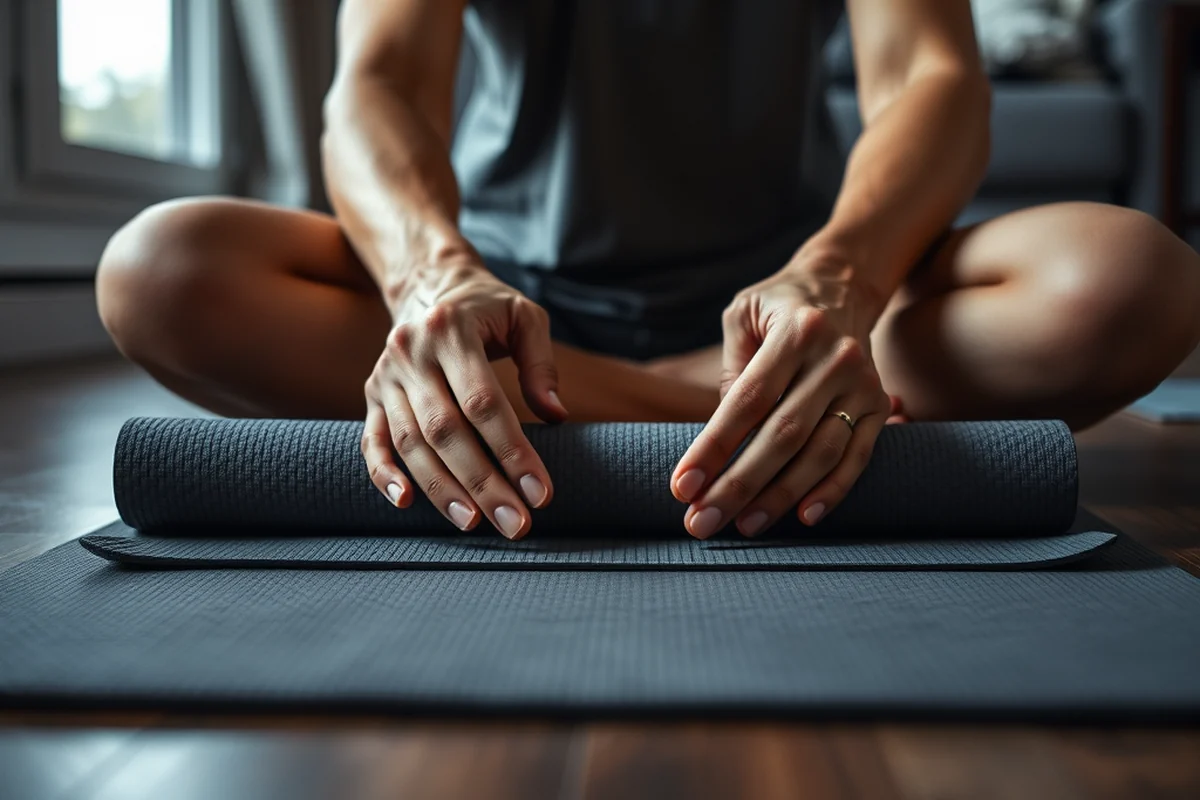
Creating a small space in my home where I could do my workouts also made a big difference. I set up a corner with a mat and a small stationary bike, which made it easy to move from one exercise to another without interruption.
I kept a journal where I wrote down each exercise, the time I did it, and how I felt afterward. This helped me track progress and see what worked best for my body. It also helped me spot patterns — like which days I felt more energized or which workouts left me sore.
“I used to think that any good cardio workout had to involve running, jumping, or high-impact movements.”— Ankle Friendly Yoga Flows editors
Related: Top ankle and knee friendly cardio
The Benefits of Low-Impact Exercise

One of the biggest benefits of low-impact cardio is that it’s incredibly effective for building endurance without straining your muscles or joints. I noticed that after just a few weeks of doing these workouts, I was able to do more without feeling tired or sore.
Another benefit is that these exercises help improve blood flow and circulation, which is especially important for people with joint pain or mobility issues. I found that after doing my workouts, I felt more energized and had more stamina for daily activities.
Perhaps the most surprising benefit was the psychological impact. I used to associate workouts with stress and fatigue, but now I see them as a way to relax, de-stress, and feel more connected with my body. This shift in mindset made a big difference in how I approached my fitness journey.
Related: Cheap ankle friendly cardio at home
How to Modify Exercises for Different Fitness Levels
I found that even the most basic exercises can be adapted to suit different fitness levels. For beginners, I focused on slower, more controlled movements, and I avoided any high-impact activities that could cause strain.
For more advanced people, I used resistance bands or light weights to increase the intensity of the workouts. This helped build muscle without putting pressure on my joints. I also tried increasing the duration of my workouts by a few minutes at a time.
It’s important to listen to your body. If a movement causes pain or discomfort, stop and adjust it. I found that using a mirror or recording myself helped me see if I was doing the exercises correctly and made it easier to modify them as needed.
Related: Cheap ankle friendly cardio
How to Stay Motivated and Consistent
The hardest part of any fitness journey is staying consistent, especially when you’re just starting out. I found that setting small, achievable goals helped keep me motivated. For example, I aimed to do my workouts three times a week for the first month and then gradually increased the frequency.
I also found that having a support system made a big difference. I started sharing my progress with friends and family, which gave me a sense of accountability and encouragement. Sometimes, just knowing that someone was cheering me on made it easier to stick with the program.
Another strategy that worked for me was finding a workout buddy. Even if we were doing our own routines, we would check in with each other to see how we were doing. This simple act of connection helped keep me on track and made the experience more enjoyable.
You don’t need a gym or a trainer — you just need a few minutes and the will to move.
Related: Affordable ankle friendly cardio at home
What to Expect in the First Few Weeks
In the first few weeks of my routine, I noticed that I was able to do my workouts with less fatigue and more ease. I also found that I was able to do more in a single session without feeling exhausted. This was a sign that my body was adapting to the new movements and becoming more efficient.
After about three weeks, I noticed a significant improvement in my stamina and endurance. I was able to do my workouts for longer periods of time without needing to rest. This was one of the first signs that my body was responding to the routine in a positive way.
By the end of the fourth week, I was seeing real progress. My joints were less sore, and I had more energy to spare. I also noticed that I was feeling more confident in my movements, which helped improve my overall mood and sense of well-being.
🧘 Beginner
Start with low-impact yoga or seated cycling — gentle and effective for newbies.
💰 Budget
No equipment needed — use your own body weight for workouts that cost nothing.
⚡ Fastest
High-intensity interval training with minimal joint stress — ideal for busy schedules.
🔥 Advanced
Add resistance bands or light weights to elevate your routine and challenge your muscles.
🔄 Maintenance
Simple, sustainable routines that keep you active without overexertion.
| The mistake | Why it happens | The fix |
|---|---|---|
| Doing the same workout every day without variation. | This can lead to plateaus, boredom, and overuse injuries. | Mix up your workouts every few days to keep your body challenged and engaged. |
| Ignoring your body's signals and pushing through pain. | This can lead to injury or long-term damage, especially to joints and muscles. | If you feel pain, stop the exercise and rest. Always listen to your body. |
| Doing workouts too quickly without proper form. | Poor form can lead to injury, especially in the joints and lower back. | Take time to learn proper form and move slowly at first, especially when starting out. |
| Not warming up before a workout. | Warming up is essential to prevent injury and prepare your body for movement. | Always start with a 5 to 10-minute warm-up, such as light stretching or a slow cardio session. |
Best Ankle Friendly Cardio At Home
Common Questions
Can I do these workouts if I have a chronic ankle condition?
Do I need any special equipment to do these workouts?
How often should I do these workouts?
Can I do these workouts if I'm just starting out with fitness?
References
- What Is Tai Chi Walking? I Practiced It for 30 Days (aaron.cs.virginia.edu)
- Wrist and ankle weights: do they actually work? (blogs.bcm.edu)
- About Physical Activity and Arthritis - CDC (cdc.gov)
- Durable Medical Equipment (DME) and Accessories; Orthotics and ... (cms.gov)
Cite this guide
Ankle Friendly Yoga Flows (2026). Best Ankle Friendly Cardio At Home. https://mellowpose.com/best-ankle-friendly-cardio-at-home/
Feel free to cite or share this guide.