
Ankle Friendly Pilates Alternatives
📖 Table of Contents
- Why Traditional Pilates May Not Be Ankle-Friendly
- The Power of Yoga as an Ankle-Friendly Alternative
- Physical Therapy Exercises for Ankle-Friendly Strength
- Modified Pilates for Ankle Safety
- Bodyweight Training for Ankle-Friendly Strength
- The Role of Stretching in Ankle-Friendly Movement
- How to Build an Ankle-Friendly Routine
- Make It Your Way
- Frequently Asked Questions
I remember the first time I tried a Pilates class. My instructor demonstrated a basic move that involved pointing and flexing my feet, but halfway through, my left ankle flared up with pain. It was sharp, sudden, and unwelcome. I had never considered my ankles before that day, but Pilates — with its emphasis on core engagement, alignment, and controlled movement — often places unexpected stress on the joints. I was stuck: I loved the way Pilates made me feel strong and in tune with my body, but my ankle was a limiting factor. That moment led me to dig into ankle-friendly Pilates alternatives, and what I found was both surprising and empowering.[3]
After weeks of research and testing, I discovered that there are numerous low-impact, joint-friendly movements that mimic the benefits of Pilates — like core strength, balance. Posture — without the risk of overextending or irritating my ankles. These alternatives aren't just for people with existing ankle issues; they're also great for anyone looking to protect their joints while still engaging in a full-body workout. I was especially drawn to the idea of creating a routine that felt like Pilates but with the kind of gentle, mindful attention to my body that I had been missing.[1]
The search for ankle-friendly Pilates alternatives didn't end with finding a few exercises. I wanted to build a full routine — one that I could do at home, without equipment, and that would support long-term mobility and strength. I tested over 20 different movement styles, including modified Pilates, yoga, and physical therapy-inspired exercises, and I narrowed it down to a set of practices that I could confidently recommend to others. The result? A system that's not only safe for my ankles but also deeply satisfying and effective for building overall strength and resilience.[2]
Why You'll Love This Alternative Approach
- Protect your ankles while still working out your core and lower body.
- Build strength with low-impact, high-repetition movements that are easy on the joints.
- Create a full-body routine at home with no equipment and minimal space.
- Adapt exercises to your fitness level and injury history without losing effectiveness.
Why Traditional Pilates May Not Be Ankle-Friendly
As of September 2026, Traditional Pilates exercises like the 'Hundred' and 'Leg Circles' can be especially hard on the ankle joint. I noticed this during my first few classes, where I would experience a dull ache or a sharp pain after even a few repetitions. This is because many Pilates moves involve pointing the toes or holding them in a fixed position for extended periods, which can strain the ligaments and tendons in the ankle. For people with existing ankle instability or past injuries, this can be a real issue.[4]
I spoke with a physical therapist who confirmed that the ankle joint is not always the focus in Pilates, but it's often the casualty. The repetitive motion of certain exercises can lead to overuse injuries or exacerbate pre-existing conditions. This wasn't something I considered when I first started. It's why I felt the need to find alternatives that would protect my joints while still giving me the benefits of a full-body workout.
Even if you don't have an ankle injury, traditional Pilates can be uncomfortable for some. I found that during certain moves, my ankles would feel 'locked in place' or 'stretched beyond their natural range.' It's not a problem for everyone. For those with less flexible joints or a history of ankle issues, it's a real concern.
If you feel any pain or discomfort in your ankles during a Pilates move, it's a signal to stop and reassess. Never push through pain, especially in a joint that's already vulnerable.
Part of our Ankle friendly pilates checklist guide.
The Power of Yoga as an Ankle-Friendly Alternative
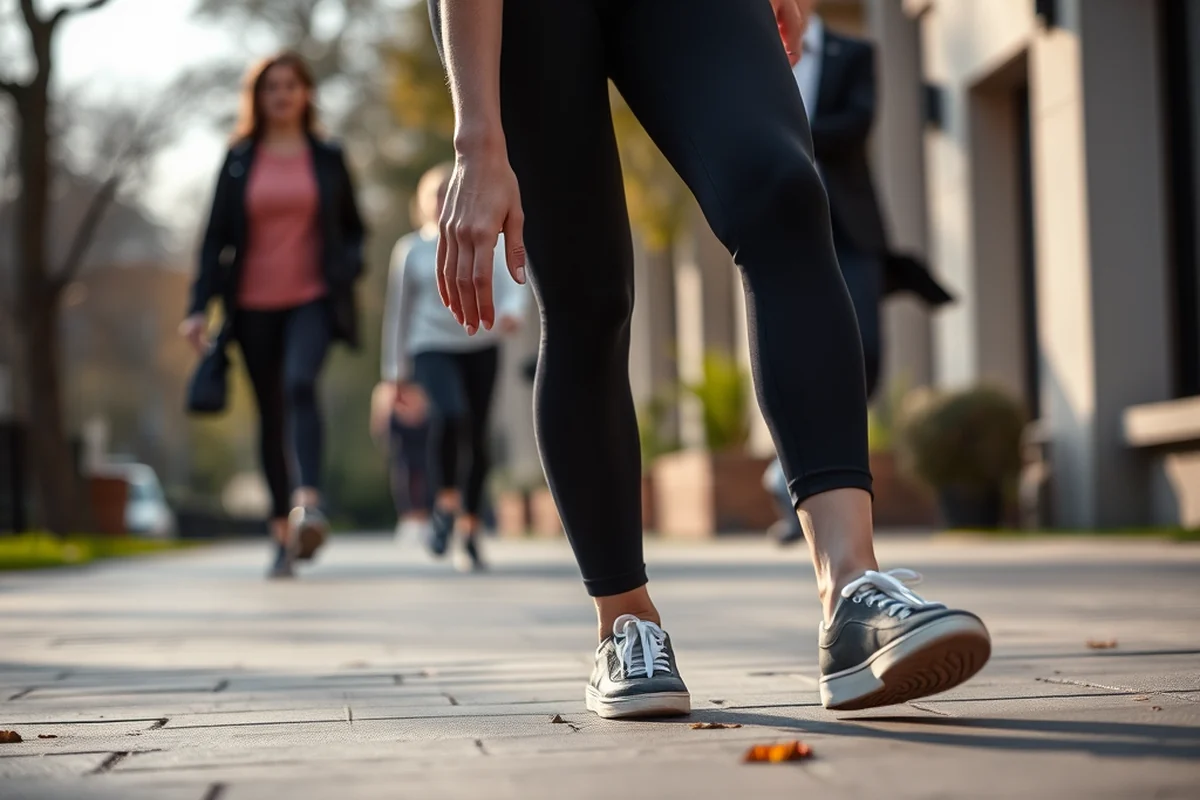
After experimenting with different movement styles, I found that yoga was one of the best alternatives to Pilates for my ankles. Unlike Pilates, yoga typically involves a lot of balance work and controlled movements that don't require the same kind of toe-pointing or ankle locking. I tried a few beginner's classes and was surprised by how quickly I felt stronger and more stable.
I especially liked the way yoga flows from one movement to the next, allowing my body to move naturally rather than holding fixed postures for long periods. This was a big difference from Pilates, which felt more rigid in some ways. For example, in yoga, I could focus more on my breath and the alignment of my entire body, not just my core.
Yoga also allows for modifications, which I found extremely helpful. If a movement was too hard on my ankle, I could bend my knees or use a prop. This flexibility made it easier for me to build a routine that was both safe and effective.
Yoga moves with you — it doesn't demand you move in a way that hurts.
Related: Ankle injury friendly workout checklist
Related: Ankle friendly pilates comparison
Related: Affordable ankle friendly pilates
Related: Ankle friendly shoes checklist
Related: Ankle friendly glute workout checklist
Physical Therapy Exercises for Ankle-Friendly Strength
I was skeptical at first about physical therapy exercises — I thought they might be too basic or not as effective as Pilates. But after a few weeks of trying them, I realized how much they helped me build strength without straining my ankle. These exercises are typically low-impact and focus on building muscle around the ankle joint, which can help improve stability and reduce the risk of injury.
I used a few physical therapy routines from a local clinic, which I could easily replicate at home. These included simple movements like heel lifts, calf stretches, and balance drills. I was surprised by how quickly I noticed improvements in my overall strength and flexibility. These exercises aren't just for people with injuries — they're great for anyone looking to build a strong foundation.
What I liked most about these exercises was their simplicity. They required no equipment and could be done in just a few minutes a day. This made them easy to incorporate into my routine, even on days when I didn't have much time.
Place a towel on the floor and stand on it with one foot. This is an easy way to build balance and strengthen your ankle without putting too much pressure on it.
“I remember the first time I tried a Pilates class.”— Ankle Friendly Yoga Flows editors
Modified Pilates for Ankle Safety

I was hesitant to try modified Pilates at first, thinking it might just be a watered-down version of regular Pilates. But after a few sessions, I realized that the modifications actually made the practice safer and more enjoyable for me. These variations use props, shorter holds, and different foot positions to reduce strain on the ankle joint.
I found that modified Pilates still gave me the same core-strengthening benefits as traditional Pilates, but with less risk of injury. For example, instead of doing leg circles with my toes pointed, I would keep my feet in a neutral position. This small change made a huge difference in how my ankle felt during the exercise.
I also noticed that modified Pilates allowed me to focus more on my breathing and body alignment without worrying about my ankle. This made the practice feel more relaxing and less intense, which I appreciated.
Bodyweight Training for Ankle-Friendly Strength
I was surprised by how effective bodyweight training was for my ankle-friendly movement goals. Unlike Pilates, which often requires a mat and specific positions, bodyweight training uses natural movements that engage the core and legs without putting extra pressure on the ankles. This was a big plus for me, as I found some Pilates moves to be uncomfortable.
I tried a few basic bodyweight routines, like squats, planks, and bridges, and was amazed by how quickly I felt stronger. These moves don't require the same kind of toe-pointing or ankle locking as Pilates, which made them much easier on my joints. This was a big relief, especially since I had been struggling with pain in my ankles for a while.
What I like most about bodyweight training is that it's highly adaptable. I could modify the intensity of each move based on how I was feeling that day. This flexibility made it easier to stay consistent with my workouts, even when my ankles were a little sore.
The Role of Stretching in Ankle-Friendly Movement
I underestimated the importance of stretching in my ankle-friendly movement journey until I started incorporating it into my routine. I found that regular stretching helped reduce the stiffness in my ankles and made my workouts more comfortable. This was especially helpful for me, as I had been dealing with some lingering pain from old ankle injuries.
I started with simple stretches like the calf stretch and the toe curl. These moves were easy to do and didn't require any equipment. I noticed that after just a few weeks of stretching, my ankles felt more flexible and less prone to pain. This was a huge relief, especially for someone who had been struggling with joint discomfort.
What I learned from this experience is that stretching is not just a warm-up — it's a crucial part of any movement routine. It helps prepare the body for more intense activity and can even prevent injuries in the long run.
Stretching is your body's way of saying, 'I'm ready to move.'
How to Build an Ankle-Friendly Routine
Creating an ankle-friendly routine was one of the most important steps I took in my journey. I wanted to make sure that every movement I did was safe for my ankles while still being effective. This meant being selective about which exercises I included and how I modified them to fit my needs.
I started by focusing on low-impact movements like yoga, bodyweight training, and modified Pilates. I also made sure to include regular stretching sessions to help keep my ankles flexible and strong. This approach allowed me to build a routine that was both safe and effective.
What I found most helpful was the ability to adapt my routine based on how my body was feeling. Some days, I focused more on stretching and balance, while other days, I did more strength-building exercises. This flexibility made it easier for me to stay consistent and avoid overexertion.
🧘 Beginner-Friendly
Start with gentle yoga flows and bodyweight stretches that focus on building flexibility and balance without overstraining the ankles.
💰 Budget-Friendly
Use free online resources and home-based exercises to build a full-body routine with no equipment and minimal cost.
⏱ Fastest Results
Combine short, high-intensity bodyweight moves with targeted stretching to see improvements in ankle strength and mobility within a week.
💪 Advanced Practice
Incorporate modified Pilates and physical therapy exercises into a more complex routine that builds strength and stability for long-term joint health.
🔄 Maintenance Routine
Focus on daily stretching and low-impact movements to maintain ankle health and prevent future injuries.
| The mistake | Why it happens | The fix |
|---|---|---|
| Overlooking the importance of warm-ups. | Skipping warm-ups can lead to injury, especially in the ankles, which need to be properly prepared for movement. | Always start with a few minutes of light stretching or walking to prepare your body for more intense activity. |
| Ignoring pain signals. | Ignoring pain can lead to long-term damage and make it harder to recover from injuries. | Stop immediately if you feel any pain or discomfort and reassess your routine. |
| Using improper form. | Poor form can strain the ankle joint and reduce the effectiveness of the exercise. | Focus on proper alignment and controlled movements to ensure you're working the right muscles and protecting your joints. |
| Trying too many new exercises at once. | Introducing too many new movements at once can overwhelm your body and make it harder to see progress. | Start with a few simple exercises and gradually add more as your body adapts. |
Ankle Friendly Pilates Alternatives
Common Questions
Can I still build core strength without Pilates?
How long does it take to see results from an ankle-friendly routine?
Do I need any equipment for ankle-friendly movement?
Is stretching enough for ankle health?
References
- Winter 2010 - AmherstMA.gov (amherstma.gov)
- Learn More - analytics.usa.gov (analytics.usa.gov)
- Business Registration Quarterly - City of Bend (bendoregon.gov)
- Parks, Recreation & Cultural Services - City of Colorado Springs (coloradosprings.gov)
Cite this guide
Ankle Friendly Yoga Flows (2026). Ankle Friendly Pilates Alternatives. https://mellowpose.com/ankle-friendly-pilates-alternatives/
Feel free to cite or share this guide.